DNA Angst
So much of what happens vaporizes into nothingness, assuring that most of our history is forgotten and obscured, the classic "mists of history." Some omissions we regret, like what our grandparents' childhood was like or what the names of their parents even were. However, there are those "peccadilloes" in life that have vanished forever, a forgiving psychic relief. This assumes, of course, that one refrained from detailing said peccadilloes on X.
Enter DNA. Although DNA traces of individuals do fade in subsequent generations, frankly, it still knows too much. If it were a witness to a crime, villains would set its little helix-shaped feet in concrete and send it deep down into the East River. DNA is very accessible nowadays with the rise of ancestry services such as AncestryDNA and 23andMe.
What does it witness? Well, there is misattributed parentage, the clinical euphemism for infidelity or hidden adoption. 23andMe warns that you may make discoveries you may not like. This isn’t merely legal boilerplate; this does happen. About 1 to 4 percent of test results point to parental misattribution, and commercial genetic testing has uncovered a substantial portion of these cases.
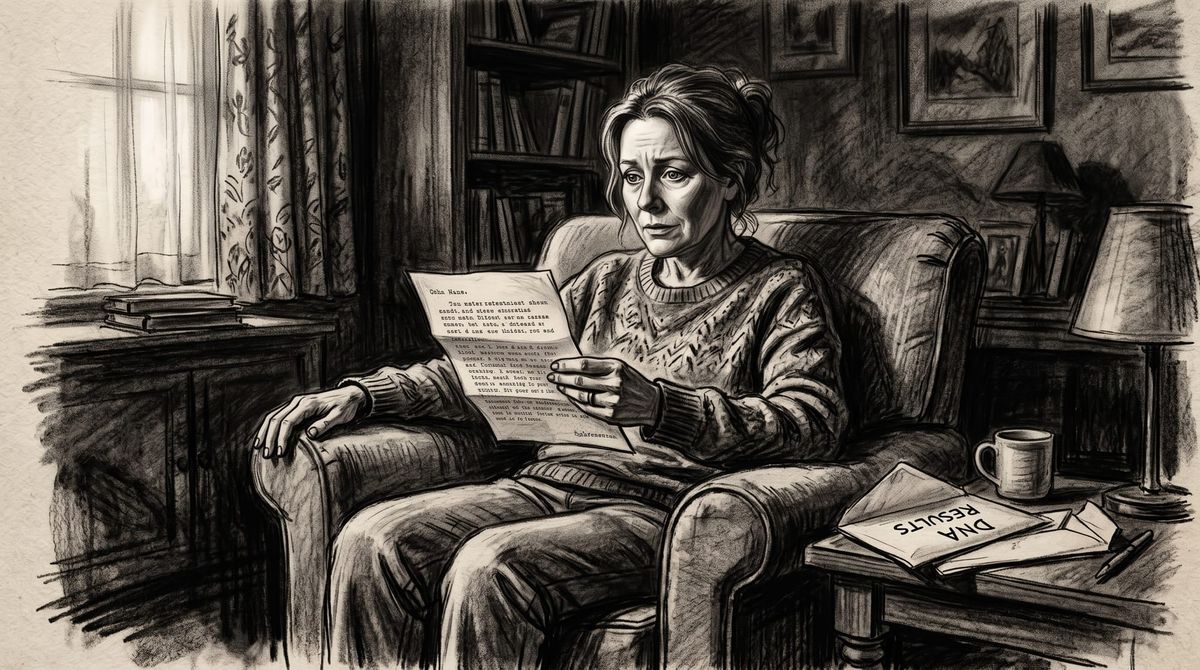
Receiving such news is often devastating. In an instant, all you have ever known is called into question. Whom can you trust if your own parents withheld the truth of your origin? Symptoms of emotional trauma appear, such as anxiety and an inability to sleep. This reverberates throughout the entire family, shocking relatives and creating uneasiness about how to relate to you. One participant equated the shock to a terminal medical diagnosis, stating that the genealogical revelation was more stunning than a prior cancer diagnosis because it felt as though half of his identity had died and vanished instantly.
As a result, two paths generally follow. Some will seek out the biological family they come from. This may involve encountering cultures very different from the one they grew up in. This, in turn, adds further disorientation, although it is tempered somewhat by the relief that one's true lineage is finally known. Others absorb the shock in isolation, choosing silence to protect remaining family bonds.
This, of course, assumes that DNA services are competent. The industry is lightly regulated, and some firms are sloppy at best. Investigators submitted a swab of DNA from a purebred Great Dane to an animal testing service, writing on the submission form that they suspected the dog was a Chihuahua. When the results returned, the lab confirmed that it was indeed a Chihuahua, calling into question the basic competence of the firm. At another firm, this one analyzing humans, a human sample was submitted alongside a sample from a dog. When the results came back, both the human and the canine reportedly possessed identical 20% Indigenous ancestry, specifically broken down as 12% Abenaki and 8% Mohawk.
Then there is the quiet unraveling of donor anonymity. For decades, the practice of anonymous sperm donation was protected by secrecy and trust. Agreements promised that the identity of donors would remain confidential. However, direct-to-consumer DNA firms have upended this arrangement. While clinics may have kept their promises, genetic relative databases allow donor-conceived individuals to find biological parents who thought they would remain anonymous.
Yet an even more disturbing revelation has emerged. More than 50 fertility doctors in the United States, alongside others in the Netherlands, England, and South Africa, have been exposed for secretly inseminating patients with their own sperm without the patients' knowledge or consent. Some individual doctors have generated as many as 90 offspring. Clearly, this is a gross violation of bioethics and fundamental human trust.
Because DNA companies have assembled databases of the most sensitive nature imaginable, one’s very essence and the identities of closest relatives, they are prime targets for attack. Unfortunately, this vulnerability was realized at 23andMe. By utilizing recycled passwords from external breaches, hackers gained access to user accounts. The compromised data included display names, birth years, geographic locations, family trees, ethnicity estimates, and highly specific mitochondrial and Y-chromosome DNA haplogroups. Whether because of this breach or not (it certainly didn’t help), 23andMe later entered bankruptcy proceedings, selling its databases to TTAM Research.
Fortunately for me, my 23andMe results contained no surprises. The expected corners of Europe lit up on the map as anticipated, although I was somewhat surprised to find I am 15% Corsican. Then again, had I chosen a different DNA testing firm, I might still be dealing with the psychic trauma of my Chihuahua heritage. I would have concluded that some questions aren't worth the saliva, especially if they come back with a wagging tail.