Is Changing Your Favorite Color Later In Life a Thing?
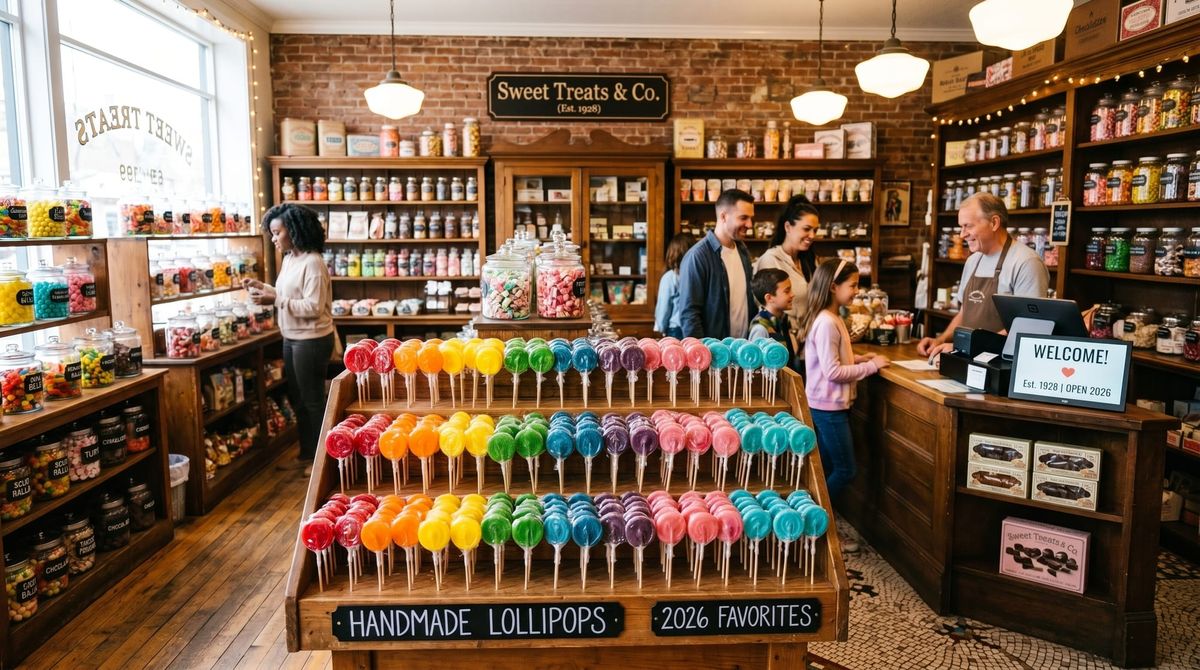
When I was a child, at the end of a visit to the family doctor, the doctor would open his drawer and there would be a box of lollipops. I would always ask for the “green one,” which meant the lime-flavored lollipop. It was this association between the color green and my preference for lime-flavored lollipops that cemented green as my favorite color.
Fast forward three decades and I am at a cafe on a beautiful autumn day. The foliage around me was spectacular, an absolute blaze of orange. It was then and there that I decided to change my favorite color from green to orange. As I did this, I felt this was not a typical thing to do. Have adults been known to change their favorite color?
But to backtrack: why do we have favorite colors in the first place? In fact, why do we have a favorite anything? Clearly, this is a universal feature as evidenced by the security questions used by the big banks ("What is your favorite movie?", "Who was your favorite teacher?"). The reason is that we are not mere observers of nature but active categorizers assigning different levels of importance to the things that we encounter. We are obsessively hierarchical, so it should be no surprise that color preference does not escape this. Yet a favorite color is not a universal human concept; it is a feature of the Western world. For example, children in isolated, small-scale societies, such as traditional foraging communities, show no systematic preferences or avoidances for specific hues.
Why we decide on a particular color has a lot to do with our environment. This was empirically uncovered with the Ecological Valence Theory (EVT) by Stephen Palmer and Karen Schloss in 2010. According to the EVT, humans like a given color to the degree that they hold positive affective associations with the objects and entities that characteristically display that color. Similar to the statistical methods used to establish the Big Five personality traits, the EVT surveyed the preferred objects of interviewees and discovered that affection or disaffection for objects of a certain color directly contributed to an individual's abstract color preference. Incidentally, across nearly every global survey, blue is ranked as the most popular color. This is no surprise since the blue sky and clean, potable waters are everywhere, providing ever-present positive associations.
To my astonishment, my desire to change my favorite color is not an unusual decision. Over time, there is a hue shift over the course of a person's life; people do choose to change their favorite color as they grow older. Children usually love bright, high-energy shades like red, orange, and yellow. However, as we age, most adults naturally shift their preferences toward cooler, calmer tones like blue and green. And as we continue to travel through life, our brains are still influenced by how much we like a color depending on the positive or negative things we associate with it.
A major shift happens again after the age of 60, driven by natural changes in our vision. Over time, the crystalline lens of the human eye yellows and thickens, which acts like a built-in pair of sunglasses that blocks out blue light. Because it becomes harder to see and tell apart shades of blue, green, and purple, older adults gradually lose their preference for blue. Instead, they begin to prefer high-contrast, warm colors like red and orange that are bright and easy to see.
So it seems my choice of a favorite color choice is a textbook case. I used things I liked as a basis to choose from (lime-flavored lollipops for green and later on, autumn foliage for orange). Additionally, as I aged, I gravitated toward the brighter orange color, a change due to my aging eyes. What once felt a little bit quirky turns out to be the norm; it’s just another way to make sense of the world.