It All Adds Up
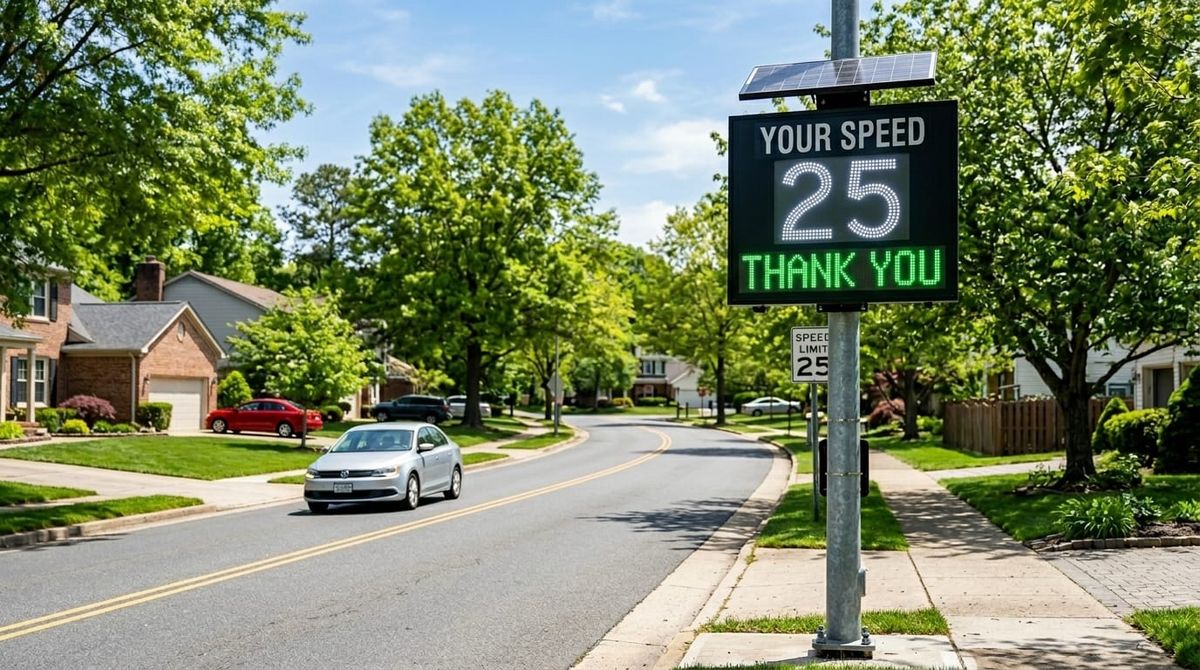
Think of all the things you may have done today. You made breakfast for your family. You drove the car, following all traffic rules. You held the door open for your office mates. You pressed the correct door-open button so those hurrying to get on the elevator didn’t miss it. You made the coffee because the old coffee started to develop a skin. You didn’t interrupt during the office meeting.
In essence, you exhibited numerous acts of cooperation, and you will create many more before the sun sets. And incidentally, so have the other 8 billion people on the planet. The sea of cooperation is ubiquitous, forming the mathematically stable baseline of our existence.
Cooperation does sound ridiculously altruistic, the province of a saint. Why cooperate? Well, for one thing, to keep all of us alive. Death is humanity's common enemy, and every day, we all do a little something to keep everyone alive. By doing our jobs or watching over friends and family, these tiny, fractional jobs, multiplied by 8 billion people, buy another day of non-extinction.
But the real reason we cooperate is energy conservation. Each person has only so much energy to spend. If an individual makes war upon the world and grabs everything he can, he will soon exhaust himself, not to mention the pushback from all the people who are invested in cooperation. Over time, networks of trust have been built so we can do more with less energy. We drive a car on roads cooperatively built rather than walk. We hold the door open for others to save time. We don’t interrupt in meetings so participants don’t have to repeat themselves.
This may sound a bit naive at first, still a bit too saint-like when describing human beings. After all, what about all the horrible wars and grotesque atrocities that occur every minute on this planet? They are indeed very real and horrible, but they can only exist because of our extensive mutual support; history records the catastrophes of war while taking for granted the silent ocean of coexistence that keeps civilization standing. Atrocities are localized and unsustainable; they can only exist as parasites and have no meaning without the baseline of cooperation. For 95% of our evolutionary history, human groups survived by constructing "reverse dominance hierarchies," which were hyper-vigilant, cooperative networks made to suppress dominance and enforce fairness. Individual power-seeking and zero-sum conflict are high-risk, high-cost behaviors that humans have actively evolved to suppress. We did not evolve to conquer one another; we evolved to conquer the world’s disorder together.
So what happens when disparate groups collide? Cooperation works within a unified culture because the day-to-day expectations are ironed out and clear. What happens when you encounter another group that has different customs? Usually, it is conflict. But the thing about conflict is that it is unsustainable. A group may wish to fight on and on, but they run the risk of extinction. It is really hard to wipe out another group, although tragically it does happen. However, it is very costly. Over time, because human energy is limited and the crushing force of warfare is so unrelenting, even the most hostile of forces eventually work out some sort of understanding. The built-in structure of existence demands this: cooperate or die.
Again, I must stress that I am keenly aware there is much pain in this world; it is much too frequent and ruinous. But if there is any way to leave you with a final thought, it is that cooperation is not an altruistic luxury. It is very real and necessary for survival. It is an enormous, massive web of interconnectedness among 8 billion people, which is far too great for the human mind to grasp. It is so enormous that even the overwhelming tragedies of human existence pale in comparison; that is how big and ubiquitous the global baseline of cooperation is. It is cooperation that is mathematically stable, while conflict is the truly expensive anomaly.