Our Virtual Chains
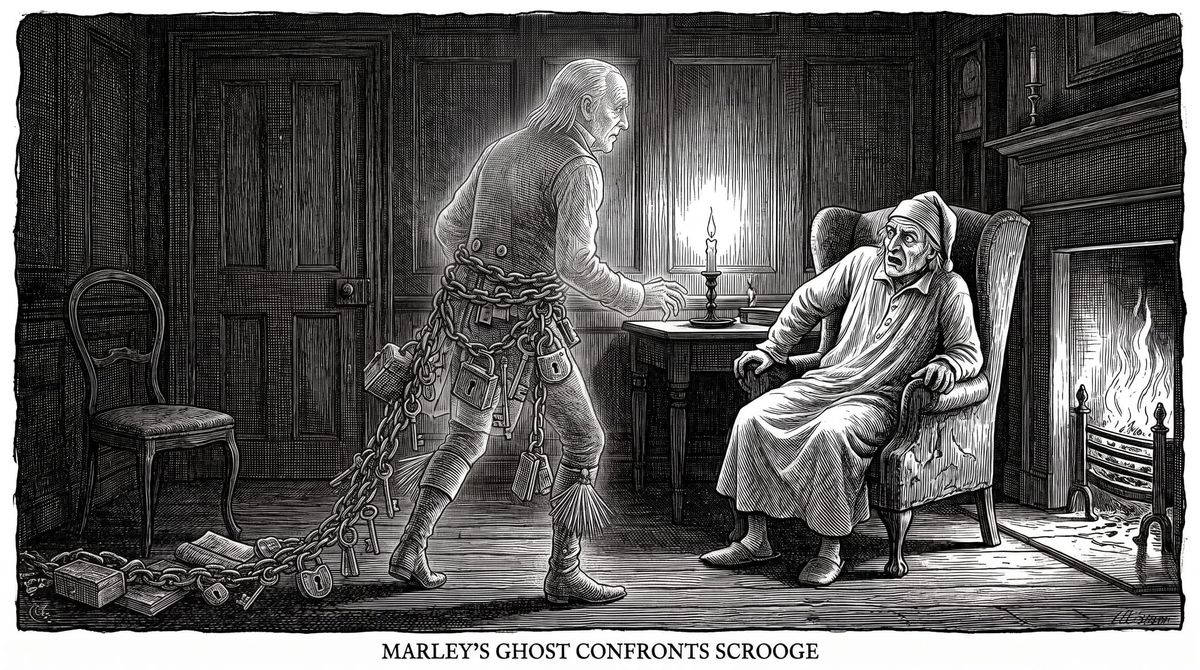
Perhaps the most memorable scene from Charles Dickens's A Christmas Carol is the arrival of Marley's Ghost. Marley worked alongside Scrooge and passed away years before. Unfortunately for Mr. Marley, he was forced to walk the netherworld constricted by suffocating chains—the spiritual and moral debt Marley accumulated by choosing ledger books over compassion and human connection:
"I wear the chain I forged in life," replied the Ghost. "I made it link by link, and yard by yard; I girded it on of my own free will, and of my own free will I wore it."
But what about our chains, our virtual chains, our endless proclamations on X or Instagram? "Link by link," month after month, we unthinkingly immortalize our stream of consciousness in rash spasms of outrage and snark. When people "Google" us, poorly conceived opinions end up defining us to others. Shouldn't half of the things uploaded to social media perish into nonexistence, unworthy of our true selves? Is it wise to document every notion that comes to mind?
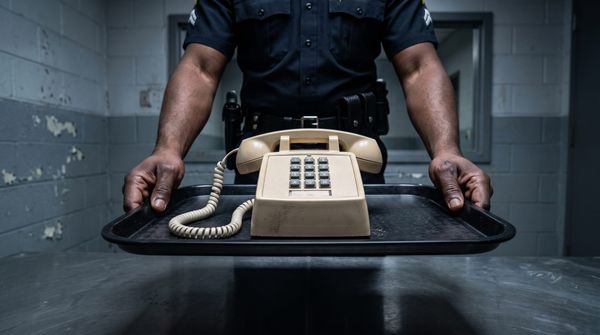
Hopefully, this is obvious to us in the 21st century, compelling us to exercise prudent restraint when online. But in earlier times, just in the last century, the consequences of instant cataloging of thoughts were not completely understood. Specifically, I am talking about the presidents of that era, from Franklin Roosevelt to Richard Nixon, and their tape machines.
People are often surprised to learn that Richard Nixon was not the only president with a taping system. President Rosevelt and President Truman experimented with it, leaving only 18 hours of recordings that mostly documented routine issues. President Eisenhower's recordings were also limited, totaling about 15 hours (with roughly 5 hours from his presidency), but there were no real bombshells there. In fact, the recordings may have boosted his image. Rather than the aloof "grandfather" image he portrayed in public, his demeanor on the tapes showed him to be decisive and firm, demonstrating solid leadership skills when working through the problems of the day.
It is safe to say that Kennedy's tapes (260 hours) and Johnson's tapes (850 hours) were far more controversial. Kennedy's tapes showed his morally questionable complicity in the overthrow of South Vietnamese President Ngo Dinh Diem and the controversial trade of U.S. Jupiter missiles in Turkey for Soviet missiles in Cuba, a trade that was denied publicly for years. Johnson's tapes also presented revelations. The recordings showed his private assessments of the Vietnam War were far more pessimistic than his public statements. They also chronicle his belief that the second attack in the Gulf of Tonkin was the result of false sonar readings or freak weather, yet he used this event to lean deeper into the Vietnam War. Perhaps the most interesting contrast was Johnson's earthy, sometimes vulgar demeanor as he arm-twisted subordinates, while Kennedy's tapes show him to be cool, professional, and in control.
Nixon, upon attaining the office, removed the recording device. According to Nixon's Chief of Staff, H. R. Haldeman, Nixon initially abhorred the idea of taping the president's meetings and telephone conversations. Nixon felt that eavesdropping on staff, diplomats, and visitors was untrustworthy and beneath the dignity of the presidency. It was only after the failure of stenographers who were present to maintain accurate, secure, and nuanced records that Nixon reversed course. In 1971, he installed his own voice-activated system so that information a stenographer might miss would be properly archived.
So I wonder, did these savvy leaders (and you must have some degree of savviness to survive the gauntlet on the way to the presidency) understand the insidious power of recording everything? Was it an amazing lack of awareness to believe that over hundreds of hours of recording, one would never say things that, if leaked, would be politically ruinous? We, on the other hand, have the "gift" of social media showing just how obvious the damage of unfiltered thoughts can be. In the mid-20th century, there were no mirrors that made this clear. "Yard by yard," these tapes forged chains that weighed down the reputations of these presidents. It is a stroke of luck that the taping systems before President Nixon were only discovered well after their terms ended. Particularly for Kennedy and Johnson, there was certainly sufficient material on those tapes to instigate Watergate-like scandals during their presidencies. Nixon was the only one ensnared in real time, crushed beneath what he had set in motion. As we continue to document our own lives online, we risk repeating that same blindness, heedlessly forging our own digital chains, link by link, for the whole world to see.