A Most Grave Legal Matter

I was late for the train and had to settle for one of the end seats in the passenger car where the passengers face each other. A man was sitting across from me and maneuvered politely as I nestled into the tight space. The man, wearing a bowler hat, wasn’t very good looking. He had squinty eyes, sallow skin, and when he smiled as he acknowledged my arrival, his teeth were very crooked.
I sat down, took out my book, and began reading.
“Mr. Laconil, I presume?” he said, addressing me.
I looked up. “Yes,” I replied.
“I have a bone to pick with you,” he said.
Startled, I looked at him quizzically. Before I had time to formulate a response, he continued.
“Oh, forgive me, I failed to introduce myself. My name is Death,” said the man.
Still a bit off-balance, and hoping I wasn’t talking to someone delusional, I asked, “Is that what your friends call you?”
“I don’t have any friends.”
That was not the response I had hoped for. As if reading my mind, he then added, “I really am Death. Take a good look at me.”
I wish I hadn’t. He looked at me with a stare that would have frightened Rasputin. It was Death himself, in the flesh—paradoxically, of course.
“You see, Robert,” he continued, “I’m not so thrilled with your book about immortality. It’s bad for business. Let me tell you a story. I was once locked in a closet by my adversaries, and while imprisoned, no one could die.”
“I thought that was Sisyphus, you know, the guy who was doomed to push the rock up the hill for eternity.”
“Oh no, that was me, Death,” he said. “That’s fake news careening across the centuries. The Romans did have Ostentisia, a god, and they had other deities, but they were figureheads. I’m the one who makes things happen, or rather, makes things stop happening.”
Clearly proud of his work, his speech was matter-of-fact.
“Anyhoo, people stopped dying. Mars complained to my captors; he was mad that the soldiers he wanted to die could not die. He felt wars would be completely illogical if the combatants insisted on living.”
“Speaking of insisting on living,” I said, hopefully buying time since it occurred to me that Death wasn’t here just to chat, “you must be mad with all those billionaires trying to unlock the secret of immortality.”
“Oh no, they don’t stand a chance. I’m just letting them spin their wheels, getting their hopes up. When the time comes, seeing the extra disappointment on their faces will be absolutely worth it. Anyway, Bob,” he continued—I preferred Robert, but does one dare argue with Death?—“I bring all this up because I own the Death franchise, and I won’t let anyone, whether it's Roman deities or the hubris of billionaires, infringe upon it. So let me get to the point.”
He stopped and looked straight at me. Again, I wish he hadn’t.
“I want you to cease and desist.”
My blood went cold. “You mean this is it?” I exclaimed. “Today is my expiration date? My final hour on this mortal coil?”
“No, no, no. Nothing like that. I’m talking legally. It’s the forever aspect of your book. I have exclusive rights to ‘forever.’ You can’t live forever, or do anything else forever for that matter, but you can be dead forever. Hence, my exclusive rights.”
I knew I was in trouble. Even though my life was not in jeopardy (at the moment!), who knows what ghoulish legal entanglements Death and his ilk are capable of. However, it has been said that under stress, sometimes great ideas surface from nowhere. And one did. Although it was crazy, it was all I had. So I threw caution to the wind, leaned forward, and began my pitch.
“I don’t suppose you have a theme song?” I said.
“A theme song?” Death’s brow furrowed, his crooked teeth vanishing behind a cold, hard sneer. “I am the absolute end of all mortal endeavor, Robert. I don’t need a jingle like a breakfast cereal. Silence is my brand.”
“Maybe, but keep an open mind,” I said. “Remember the theme song Clio wrote?”
“Oh, you mean the theme to Gilligan’s Island? The Professor and Mary Ann? I can’t get that out of my head.”
“And that’s the point. I can’t help but notice you carry yourself with a bit of flair,” I said hoping flattery worked with the non-human. “You like the dramatic.”
“Well, you can’t get any more dramatic than dying,” Death said. He tried to sound nonchalant about his handiwork, but it was clear he was engaging in false modesty.
“So wouldn’t it be great if, when you make your appearance to the about-to-be-dearly-departed, there’s”—I can’t believe I’m saying this—“a soundtrack, like a theme song?”
“I’m listening,” he said, his eyes narrowing “But if this is some pathetic mortal stalling tactic to thwart my lawsuit…”
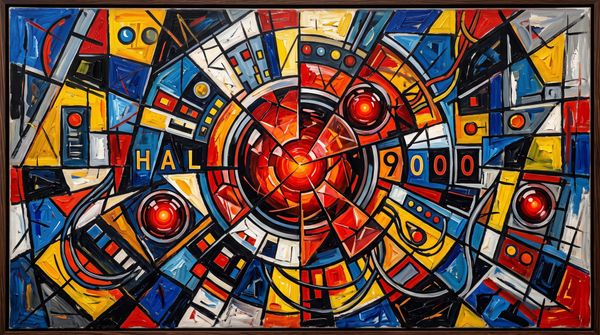
“But just think about it. Your arrival is terrifying enough, but why stop there?” I pressed. “Imagine low, rumbling tones, like the opening of 2001: A Space Odyssey.”
“I did like that movie…”
“And why stop there? Why not add a terrifying, slow cello figure and a choir of dissonant voices? Voices all around, like Sensurround.”
Death was silent, nodding his head as he mentally evaluated my pitch. “Can you hum a few bars?” he finally asked.
I hummed a few bars in a gravelly voice. A few of the other train riders gave me suspicious looks, but I didn’t care; so much was at stake. Amazingly, Death seemed to approve. He subtly swayed in a creepy way to my singing, his ego soaring, a man reclaiming his abandoned thespian aspirations.
“Okay, I guess I’ll let you have ‘forever’ for a little while,” he said mysteriously, implying that the while I had left was littler than I hoped.
“Write the music down,” he continued, “put it in an envelope with no address, and pop it in a mailbox. It will end up in the dead letter office. I’ll take it from there.” He looked out the window, his smile crooked, an expression of momentary peace. “Oh, this is where I get off.”
He then got up and detrained at Poughkeepsie. I think I detected a spring in his step as he left, his routine rejuvenated. It was strangely comforting to know that he was so willing to surrender his exclusive rights to "forever.” Death, in spite of his terrifying power, suffered from the same crippling insecurity that we mortals do. Seeing him adopt his very own theme song proved that even Death is desperate for an audience.